
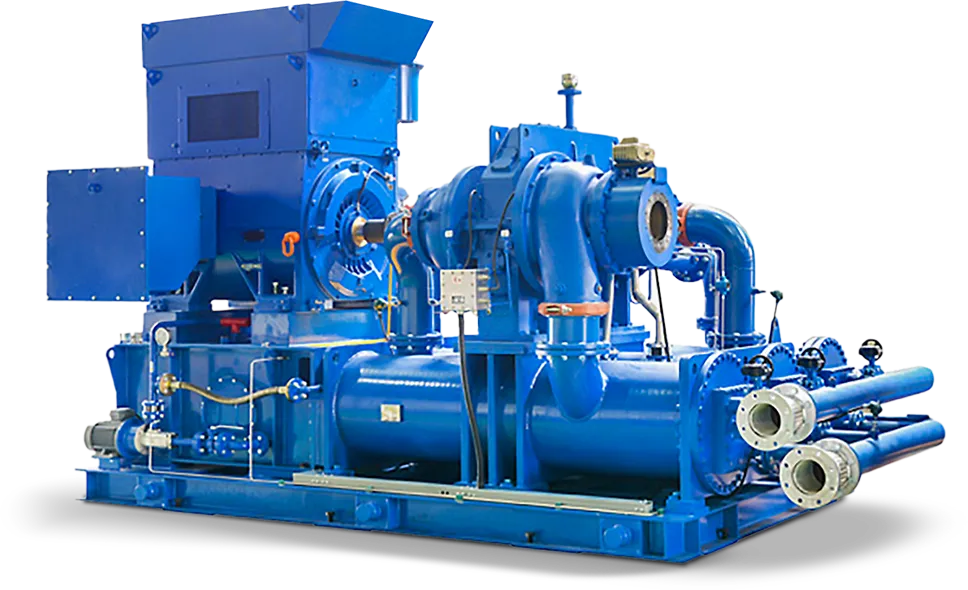
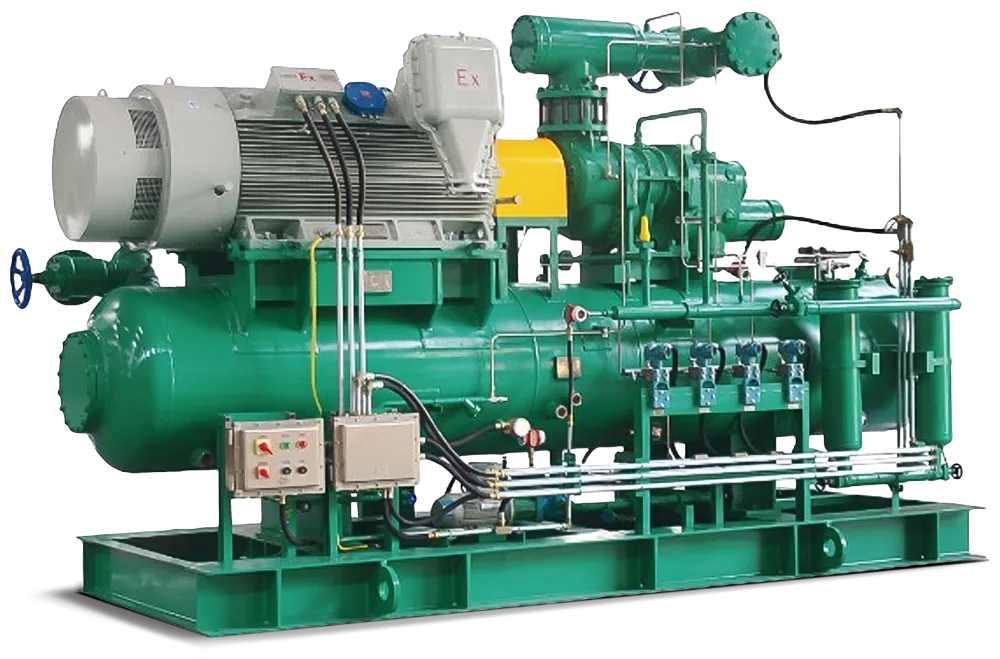
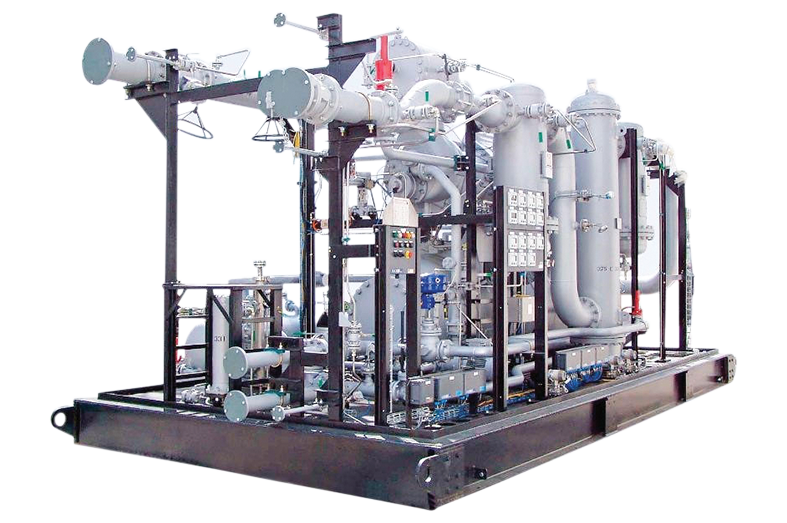

Kaishan is a leading manufacturer of organic Rankine cycle (ORC) power generation systems. Our products currently generate nearly 100 MW of power in facilities around the world, where they play a key role in curbing CO2 emissions and reducing overall environmental impact.
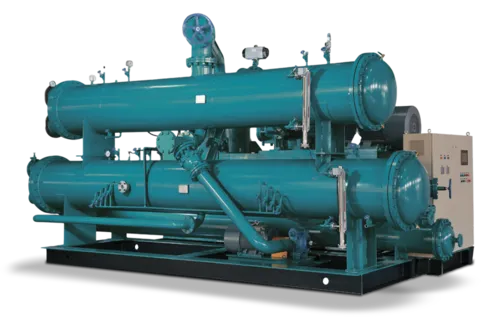
The Rankine cycle is the scientific name for the idealized thermodynamic cycle of a heat engine. In these products, heated fluid from a customer process is exchanged with a refrigerant, then expanded back into a cold liquid through a rotary screw airend, similar to those used in our rotary screw air compressors. This refrigerant expansion to liquid creates rotational energy through the screws, turning an electrical generator, thus converting heat energy to electrical energy. In these generators, energy is produced from lower temperature sources to reduce greenhouse gas emissions. Kaishan’s ORC power plants feature a patented screw expander system capable of improving isentropic efficiency by as much as 90% compared to conventional turbines. Our ORC expanders are versatile and easy to fit into your existing workflow, with multiple condenser options and power generation capabilities ranging from 50kW to multi-megawatts.
ORC Power Generator Benefits
- Low Capital Costs: ORC generators provide the opportunity to recover heat from lower temperature sources compared to traditional steam turbines. This opportunity can provide significant cost savings for your organization. Compared to other renewable power solutions, the combined cost of purchasing and running an ORC system is relatively low, making it one of the best values for organizations looking to improve their environmental credentials.
- High Efficiency: The simplified system and lower operating speeds of a rotary screw ORC expander offers high reliability in smaller waste heat recovery applications. Maintenance is typically limited to servicing valves and maintaining the lubrication system.
- Reduced CO2 Emissions: ORC power generation is a 100% clean solution with no emissions or byproducts. Depending on where they are used, these systems may help companies qualify for carbon or renewable energy credits. These credits can further help reduce operational costs.
- Less Maintenance: The rotary screw ORC runs under less pressure and rotates more slowly for improved worker safety. Pump components do not experience continual exposure to water, so they are less likely to rust or erode—which increases their operational life.
Performance Suited for Your Application
ORC power generation technology is suitable for use in a variety of applications. Our products can be configured to produce energy from any of the following sources:
- Water used for engine cooling circuits
- Geothermal hot water (brine)
- Ethanol, gasoline, thermal oil, and other chemicals
- Exhaust gasses produced by conventional turbines or gas or diesel IC engines
- Hot gasses from kilns and furnaces used in cement, glass, and other manufacturing processes
- Any application where heat can be transferred to a fluid
ORC is a novel technology that is continuously being refined. As the technology evolves, Kaishan will remain at the forefront and continue to offer innovative products. Reach out today to learn more about ORC power generators or to request a quote for a power generation system that’s customized to the needs of your facility. Contact us today.